

Replacing an air conditioner is one of the bigger decisions a Fort Worth homeowner makes, and the size and SEER2 rating you choose shape your bills for the life of the system. We measure your home with a proper load calculation, recommend the capacity and SEER2 rating that suit it, and give you a free written quote with financing options before you commit. Our NATE-certified technicians do the installation, and the work is backed by strong manufacturer warranties and our 100% satisfaction guarantee.
If a smart repair will buy you several more good years, we will say so. Our AC repair team handles that side, and our guide on how long an AC unit lasts in Texas helps you weigh the two.
Bigger is not better. An oversized air conditioner short-cycles, wastes energy and leaves the house humid. An undersized one runs constantly and wears out early. So we do not guess from the square footage of the old unit. A load calculation looks at:
That tells us the capacity the house needs. From there we recommend a SEER2 rating that balances what you spend now with what you save over our long cooling season.
Federal energy rules set a higher floor in the South. Under the Department of Energy standard in 10 CFR 430.32, a split-system central air conditioner installed in Texas on or after January 1, 2023 must be rated at least 14.3 SEER2 if it is under 45,000 Btu per hour (roughly a 3.5-ton system and smaller), and at least 13.8 SEER2 if it is larger. Every system we quote meets that floor, and we show you the SEER2 rating of each option so you can compare.
ENERGY STAR estimates that, depending on where you live, replacing old heating and cooling equipment with ENERGY STAR certified equipment can cut an annual energy bill by nearly $140. It also advises sealing the big air leaks and duct problems first, so a new system is not paying for losses elsewhere in the house. Want the options priced for your home? Call us at 817-290-3373 or book online for a free estimate.
Residential air conditioning is in the middle of a refrigerant change under the EPA’s AIM Act rules. A final EPA rule, published May 26, 2026 and effective July 27, 2026, allows residential air conditioning and heat pump equipment that was manufactured in or imported into the United States before January 1, 2025 to continue to be installed. In practice, that means you may be offered either an older-design system from existing stock or a newer one. We will tell you which refrigerant each quoted system uses and what that means for future service.
In Fort Worth, a permit is required for work that changes or repairs a home’s mechanical systems, and the city issues residential permits only to a registered contractor or to a homeowner working on the home they live in. When we replace your air conditioner:
You get a clear written quote before anything is ordered. We offer flexible financing so you can install the right system now and pay over time, and manufacturer rebates where they are available. Gold Star Membership adds yearly tune-ups and priority scheduling to keep the new system running the way it did on day one.

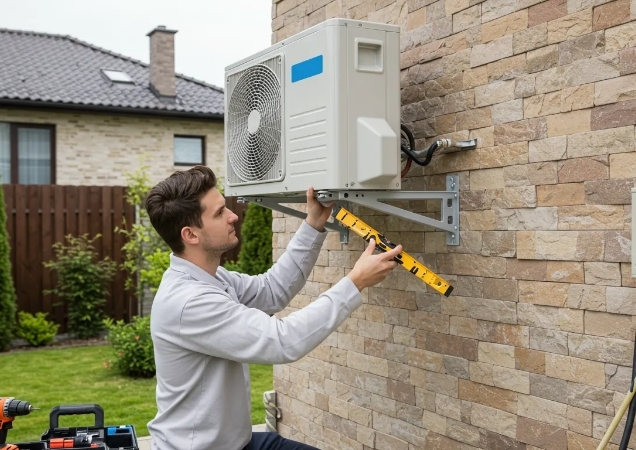
A central air conditioner is not the only answer. A heat pump cools in summer and heats in winter from one outdoor unit, so it replaces both the air conditioner and the furnace. For an addition, a garage or a room the ducts do not reach, ductless mini-split systems are often the better fit.
We install air conditioners across Fort Worth and nearby cities from our Haltom City office. Two neighboring cities have their own pages with local permit details: AC installation in Keller and new air conditioning systems in Southlake. For everything we do for cooling, see our air conditioning services.
Schedule a visit and we will measure the house, walk you through the options and put the price in writing.
A split-system air conditioner installed in Texas since January 1, 2023 must be at least 14.3 SEER2 if it is under 45,000 Btu per hour, and at least 13.8 SEER2 if it is 45,000 Btu per hour or larger. Higher ratings cost more upfront and use less power.
An EPA final rule effective July 27, 2026 lets contractors keep installing residential air conditioning and heat pump equipment that was manufactured or imported before January 1, 2025. We tell you which refrigerant every system we quote uses.
Yes. Fort Worth requires a permit for work that changes or repairs a home’s mechanical systems, and only a registered contractor or a homeowner working on their own primary residence can apply. We pull the permit as part of the job.
With a load calculation, not a guess. We look at your square footage, insulation, windows, sun exposure and ductwork, because an oversized or undersized unit costs you in comfort, bills and lifespan.
It depends on its age, its condition and what it costs to keep running. ENERGY STAR suggests having a system evaluated once it is more than 10 years old or no longer keeps the house comfortable. We will give you an honest answer either way.
Same day appointments across Fort Worth & Tarrant County. Fully-stocked trucks, friendly uniformed techs, upfront flat-rate pricing, call now and we’ll be there.

Monday to Friday: 7 am to 6 pm
Saturday: 8 am to 3 pm
Sunday: Closed
Emergency line answered 24/7: 817-290-3373
License #: TACLB00028662E | M46192 | TECL-38309