
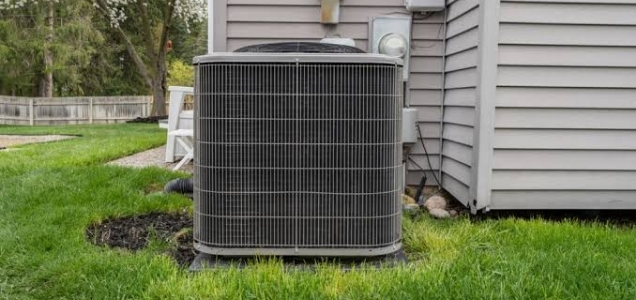
The U.S. Department of Energy estimates that a central air conditioner in Texas and the other hot-humid states lasts about 18 years on average, against about 21 nationally, and that a heat pump here averages about 15. Those are federal planning averages, not a promise for any one unit.
Where your own system lands depends on how many hours it runs each year, how well it was sized and installed, and whether its coils, refrigerant charge and filter get looked after. If yours is getting on in years or already giving you trouble, call us at 817-290-3373 or book online and we will tell you what we find.
When the Department of Energy set the current efficiency standards for home air conditioners and heat pumps, it had to estimate how long the equipment lasts, because the payback on a better unit depends on how many years it keeps running. Its 2017 direct final rule on central air conditioners and heat pumps publishes those estimates for three climate regions. Texas sits in the one DOE calls hot-humid, along with Oklahoma, Louisiana, Arkansas, Florida and most of the Southeast.
| Equipment | National average | North | Hot-humid (includes Texas) | Hot-dry (AZ, CA, NV, NM) |
|---|---|---|---|---|
| Central air conditioner | 21.2 years | 24.1 years | 18.0 years | 24.9 years |
| Heat pump | 15.3 years | 16.4 years | 15.1 years | 15.4 years |
An average across a curve. DOE models failure with a survival curve: each year some share of the units in service fail for good, and that share grows as they age. An average of 18 years means some Texas systems were replaced well before that and some kept going for years past it. It is not a date on which any one unit is due to quit.
Built from older equipment. DOE fitted its lifetime curve to match historical shipments from 1983 to 2009, the most recent data it could access. The estimate rests on what happened to millions of real systems, but systems of that era, not the unit installed in your yard last spring.
Hours first, age second. DOE treats the life of a mechanical device as its total operating hours, so equipment that runs fewer hours a year lasts more years. Because some failures come with age alone, it assumed half follow operating hours and half follow age, then adjusted each region by how long its systems run. That is why the hot-humid air conditioner figure sits about three years under the national one.
The heat pump row is the one people find surprising. A heat pump is an air conditioner that also runs in reverse to heat the house, so its compressor keeps working through the winter, and DOE puts it near 15 years in every region. In Texas the gap to a straight air conditioner narrows to about three years, which is one of the trade-offs in choosing between a heat pump and a central air conditioner with a furnace.
DOE does not publish run hours for Fort Worth, but NOAA’s daily record for Dallas-Fort Worth Airport shows how much cooling our climate asks for. We counted these ourselves from the airport’s daily highs, lows and mean temperatures.
| Measure at DFW Airport | 1991 to 2020 average | 2026 (provisional, through Oct. 27) |
|---|---|---|
| Days reaching 90 degrees or higher | 106 a year | 136 |
| Days reaching 100 degrees or higher | 20 a year | 52 |
| Nights that never fell below 80 degrees | 12 to 13 a year | 44 |
| Cooling degree days (base 65) | 2,919 a year | 3,731 |
| Heating degree days (base 65) | 2,152 a year | 917 |
The U.S. Energy Information Administration uses degree days to measure how much heating or cooling a building needs. A cooling degree day compares a day’s mean temperature with 65 degrees, so a 90 degree high with a 66 degree low adds 13. An average DFW year piles up 2,919 of them against 2,152 heating degree days, which makes cooling the bigger job for a system here.
2026 ran well past that. By October 27 the airport had logged 3,731 cooling degree days, already more than a quarter above the total for an average full year, along with 52 days at 100 degrees or above and 44 nights that stayed at 80 or warmer. In DOE’s terms, every one of those extra degree days is extra operating hours.
Run time sets the pace. Each of these faults adds run time or damages parts directly, and ENERGY STAR or the EPA names every one of them.
ENERGY STAR says improper installation can reduce a system’s efficiency by up to 30 percent and possibly shorten the equipment’s life. Size matters too: an undersized system runs nearly nonstop to keep up, and an oversized one cycles on and off too quickly and leaves the house humid. That is why our installation work starts with a load calculation.
Dirty evaporator and condenser coils, according to ENERGY STAR’s maintenance checklist, reduce a system’s ability to cool the house and make it run longer, raising energy costs and reducing the life of the equipment. Airflow problems from dirty or badly adjusted blower parts can cut efficiency by up to 15 percent. Both add more of what DOE’s lifetime model counts against a system: hours.
Too much or too little refrigerant makes a system less efficient and, ENERGY STAR says, reduces the life of the equipment. The EPA adds that major leaks rarely develop in properly installed and regularly maintained units, and that when one does, the technician should locate and repair it instead of topping it off. Finding and sealing that leak is same-day AC repair work for our NATE-certified technicians, with a flat price you approve before work starts.
ENERGY STAR says faulty electrical connections can make a system run unsafely and reduce the life of major components. A proper check-up tightens those connections and measures voltage and current on the motors.
A dirty filter can increase energy costs and damage the equipment, leading to early failure, in ENERGY STAR’s words. This is the one item you can handle yourself: inspect, clean or change the filter once a month, which matters most in the heavy-use summer months. A clean filter also keeps dust and dirt from building up inside the system, where it leads to expensive maintenance or an early failure.
The EPA’s HCFC-22 answers for homeowners say no new R-22 has been made or imported since January 1, 2020, and no new central air conditioner using it can be bought. You are not required to replace one, and reclaimed refrigerant still services existing systems, but a unit on R-22 is by definition an older one. A system that has needed refrigerant more than once points to a leak that was topped off instead of repaired.
The same DFW weather reaches every house we service, from our office in Haltom City to AC repair calls in Keller and across Fort Worth. In 2026 the airport’s first 90 degree high came on March 21 and its last on October 15. The 100 degree stretch ran from July 7 to September 16, and on the 44 nights that stayed at 80 or above, a system that ran all afternoon got no long rest before the next day began.
ENERGY STAR recommends an annual pre-season check-up, with the cooling side done in spring because contractors get busy once summer arrives. Here, spring is short: 90 degree days started before the end of March this year.
ENERGY STAR says a system over 10 years old, or one no longer keeping the house comfortable, should be checked by a professional.
Then we price the repair and a new system sized with a load calculation side by side.
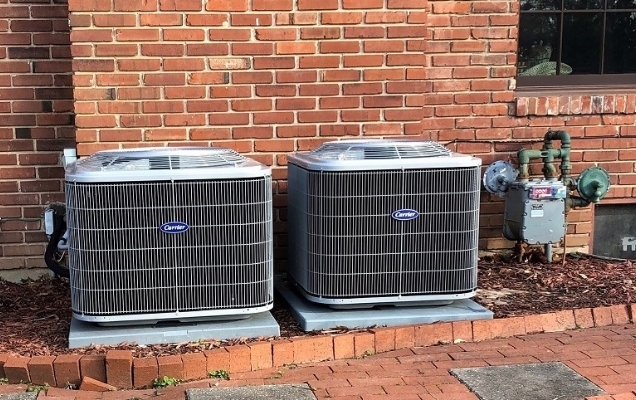

Tell us how old your system is and what it is doing, and we will tell you honestly whether it has good years left. We answer Monday to Friday 7 am to 6 pm and Saturday 8 am to 3 pm, with a 24/7 line for emergencies, and our Texas air conditioning license is TACLB00028662E.
About 18 years on average. The Department of Energy’s 2017 efficiency rule estimates that a central air conditioner in the hot-humid region, which includes Texas, lasts 18.0 years, against 21.2 nationally and 24.1 in the North. A unit that runs more hours or misses upkeep tends to land below that.
Not quite. DOE estimates that a heat pump in the hot-humid region lasts about 15.1 years, against 18.0 for a central air conditioner. A heat pump’s compressor runs through the winter as well as the summer, and DOE ties much of a system’s life to its operating hours.
It removes the faults that take years off. ENERGY STAR’s maintenance checklist says dirty coils, the wrong refrigerant charge, faulty electrical connections and dirty filters all reduce equipment life, and the EPA says proper servicing prolongs the life of the system. ENERGY STAR suggests doing the cooling check-up in spring.
Yes. NOAA’s daily record for DFW Airport shows 52 days at 100 degrees or above in 2026 through October 27, against a 1991 to 2020 average of about 20 a year, plus 44 nights that never fell below 80. More hot days and warm nights mean more operating hours on every system.
No. The EPA does not require homeowners to replace existing HCFC-22 (R-22) equipment, and recovered refrigerant cleaned to the same specifications as new remains available for servicing. No new R-22 has been made or imported since January 1, 2020, so a system that uses it is an older unit worth having evaluated.
Same day appointments across Fort Worth & Tarrant County. Fully-stocked trucks, friendly uniformed techs, upfront flat-rate pricing, call now and we’ll be there.

Monday to Friday: 7 am to 6 pm
Saturday: 8 am to 3 pm
Sunday: Closed
Emergency line answered 24/7: 817-290-3373
License #: TACLB00028662E | M46192 | TECL-38309